
Advancing Circularity in Temporary Exhibit Builds
At MC², circular thinking is shaping how we build temporary exhibits. In 2025, the expanded use of our Thunder structural system helped keep more than 15 kilometers of materials in circulation, demonstrating how smart design can reduce waste while delivering high-impact builds.
Engineered for a Circular Economy
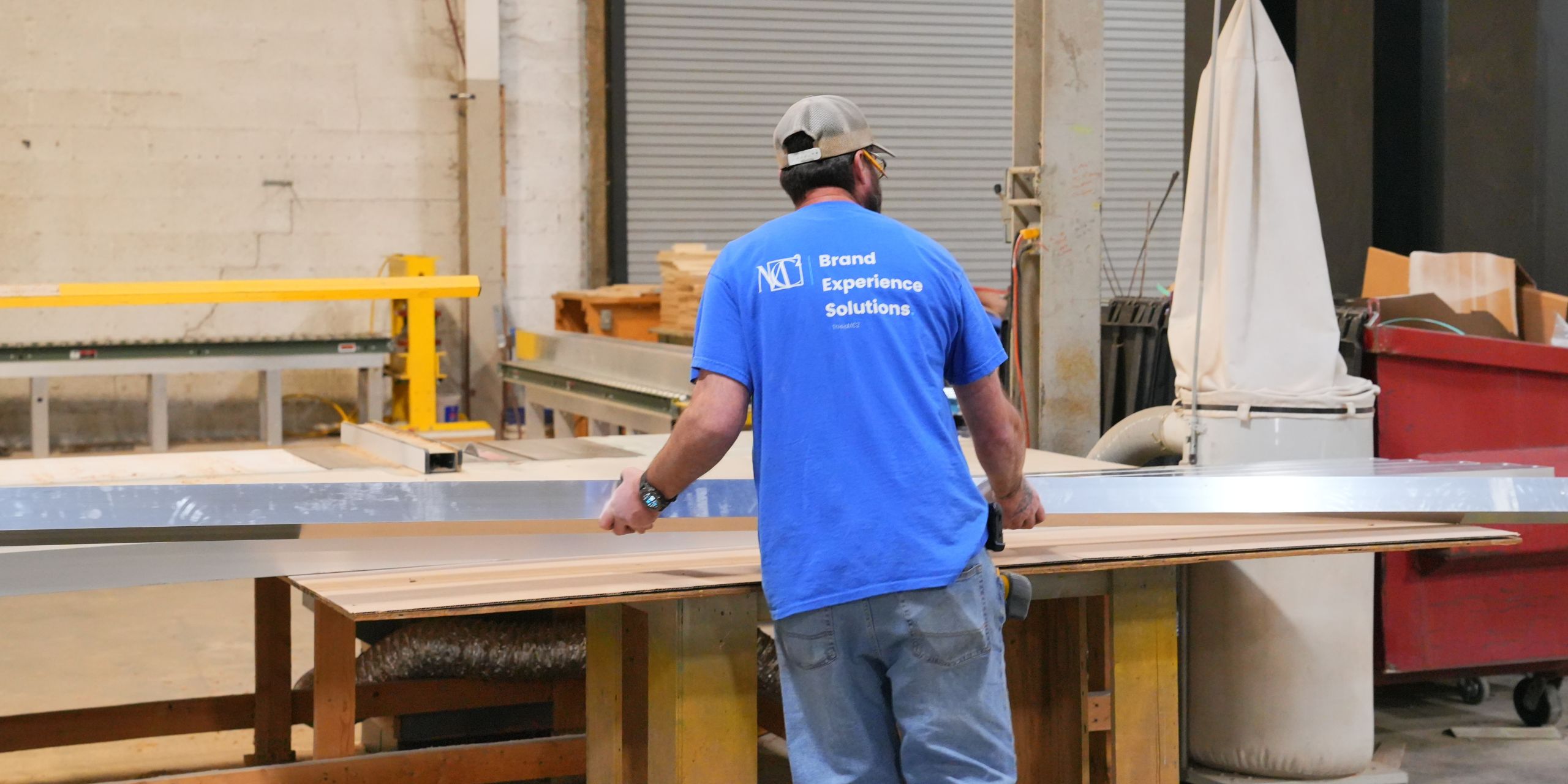
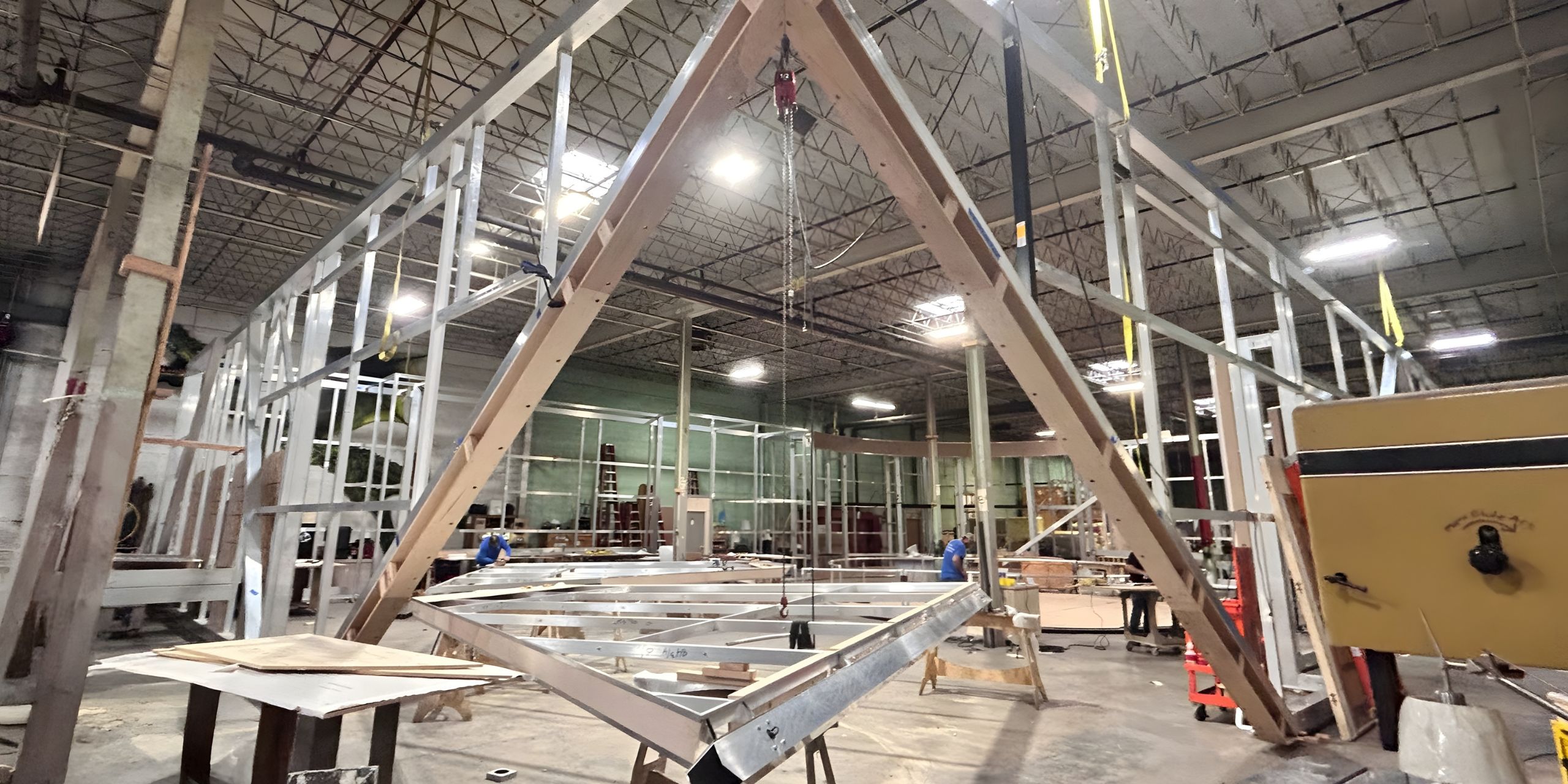
In 2025, our sustainability commitment continued through the expanded use of Thunder structural materials, our proprietary structural system used in exhibit builds. Made from recycled aluminum, this building solution supports how we design, build and repurpose temporary exhibit structures, minimizing the use of newly manufactured materials while maximizing efficiency.
Aluminum’s high recyclability and corrosion resistance make it an ideal circular resource. It can be reused repeatedly without significant loss of strength or durability, and when it eventually reaches the end of its life, Thunder can be fully recycled.
Reusing materials rather than discarding them helps our teams significantly reduce material waste and lifecycle emissions. Producing recycled aluminum requires about 95% less energy than producing primary aluminum. In addition, Thunder’s modular, bolted design allows for easy disassembly, relocation and reinstallation, helping extend the usable life of every component.
2025 Impact
In 2025, Thunder was reused across 50,760 feet (15,471 meters) of temporary exhibition structures – equivalent to 9.61 miles (15.47 kilometers) of material kept in use rather than entering the waste stream.
This measurable impact highlights our commitment to the circular economy and shows how adaptable, resource-efficient design can deliver lasting value for our clients.
Investing in the Future
Our sustainability efforts extend beyond exhibit construction and into local classrooms. MC² donated materials valued at $15,000–$20,000 USD (CHF 11,955–15,940) to trade schools and high schools, providing students with hands-on materials such as wood sheets, acrylic, HPL laminates and graphic substrates.
These donations support education, workforce development and local economic growth – ensuring that materials continue to create value even beyond their use in our production processes.